A novel pneumatic spring device designed to reduce peak mooring loads on Floating Offshore Wind Turbines. The four-year project spanned computer simulation, regulatory permitting, custom hardware development, and a live at-sea test in the Atlantic Ocean off Virginia Beach.
The IMS consists of a braided Dyneema sleeve with an internal air bladder that functions as a compliant element within a floating platform’s mooring system. As tension increases, the device constricts and stiffens, absorbing dynamic loads that would otherwise be transmitted directly to anchor lines and seabed connections. University of Exeter modeling suggested the IMS can reduce peak mooring loads by approximately six percent in 60-meter water depths — a meaningful reduction for the structural design of floating wind platforms.
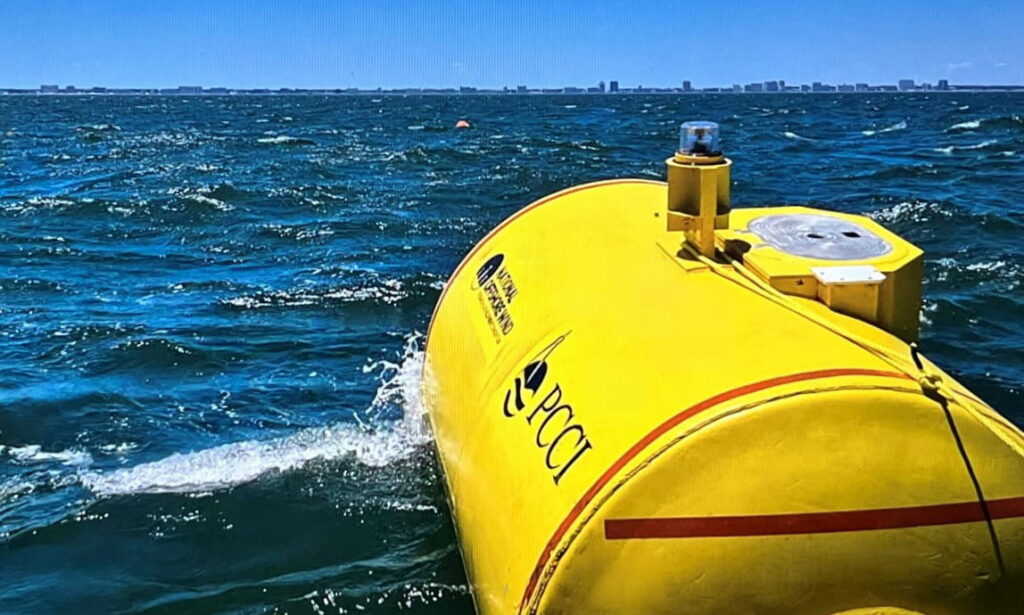
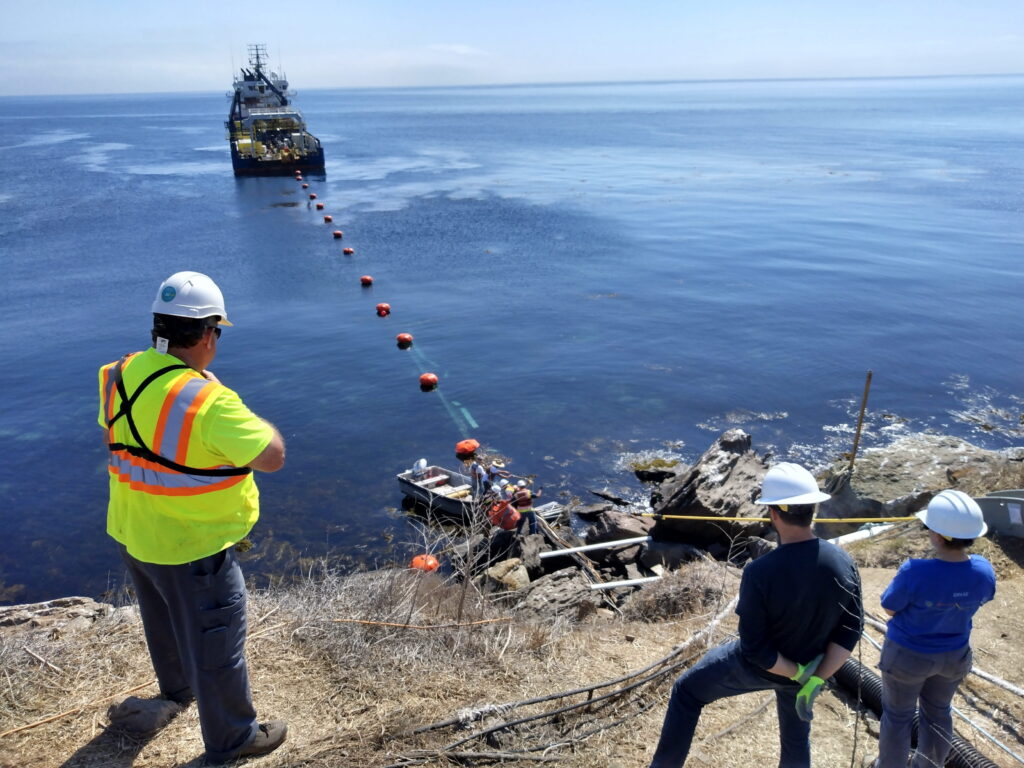
PCCI designed and executed a quarter-scale at-sea test of two prototype IMS units — one two-meter and one four-meter device — installed in a custom taut mooring 3.5 nautical miles off the Virginia coast in 47 feet of water. The test mooring featured a buoyant-tension geometry that used lift bags and a custom instrumented data buoy to apply and measure loads on the IMS units. PCCI’s naval architects modified a steel mooring buoy to house dual independent data acquisition systems, battery banks, pneumatic air storage, and telemetry equipment. The team navigated a multi-agency permitting process involving the US Army Corps of Engineers, US Coast Guard, National Marine Fisheries Service, and the Department of Energy prior to installation.
The IMS units were successfully deployed, pressurized, and subjected to two months of open-ocean conditions including tidal currents exceeding three knots and wave heights up to two meters. Peak tensions of 4.75 metric tons were recorded. The test identified air hose connections as a key vulnerability of the current design, with repeated pressure losses attributed to hose fatigue under dynamic mooring conditions. These findings, consistent with an independent Approval-in-Principle review by the American Bureau of Shipping, define a clear engineering roadmap for the next phase of IMS development toward full-scale deployment.