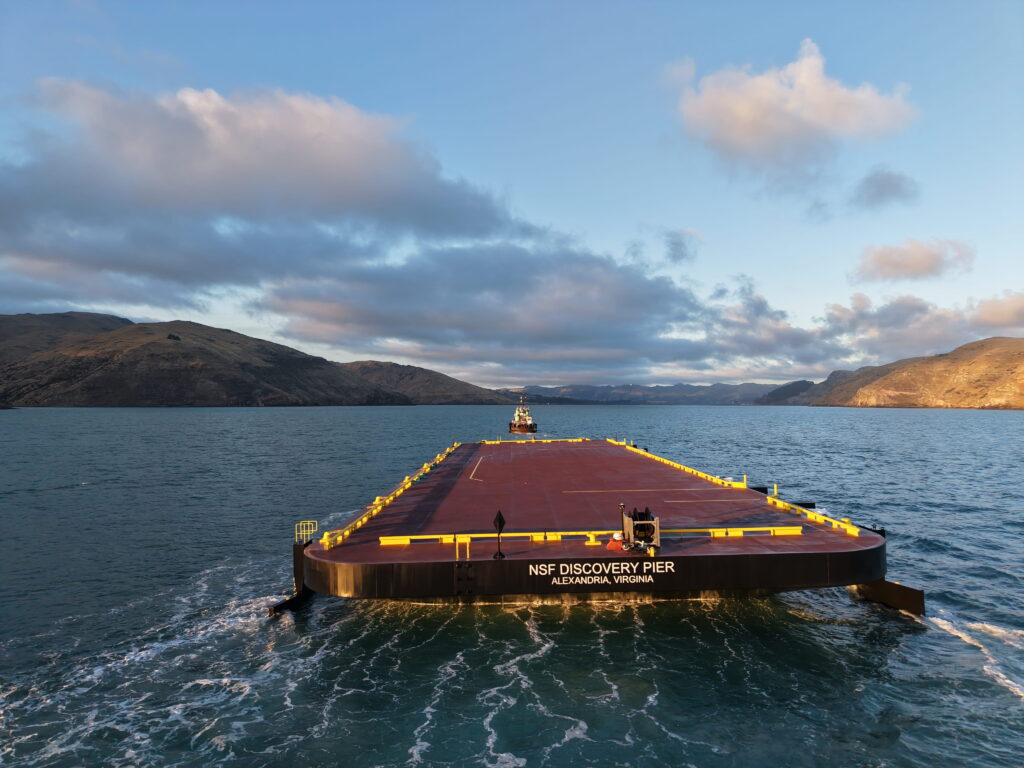
PCCI provided the preliminary design and feasibility study for a novel, ice-capable barge to function as a floating pier at McMurdo Station, Antarctica. Built closely to PCCI’s notional design, Discovery Pier will serve as critical marine infrastructure designed to stabilize cargo operations at one of the world’s most remote scientific bases. This innovation replaces the increasingly unreliable ice piers with a permanent, steel docking platform engineered to remain on-station year-round. The new system supports heavy vehicle traffic and intensive cargo handling during the vital resupply windows of the Austral summer.
Located over 2,200 miles from the nearest resupply hub, McMurdo Station depends on annual sealift deliveries of fuel and equipment to sustain the United States Antarctic Program. Historically, this logistics link relied on a temporary ice pier that faced increasing challenges from warming ice conditions and structural instability. The new barge pier is designed for a minimum 20-year service life, providing a low-maintenance, stable platform for vessel berthing, refueling, and heavy equipment transfers.
During the initial ice pier replacement study, PCCI evaluated the feasibility of modifying existing US-flagged barges. Our analysis determined that standard barge hulls could not withstand the crushing force of winter sea ice and that seasonal haul-outs of modular barges were logistically infeasible. Consequently, PCCI conceived a bespoke, ice-capable barge with a hull geometry similar to an icebreaker.
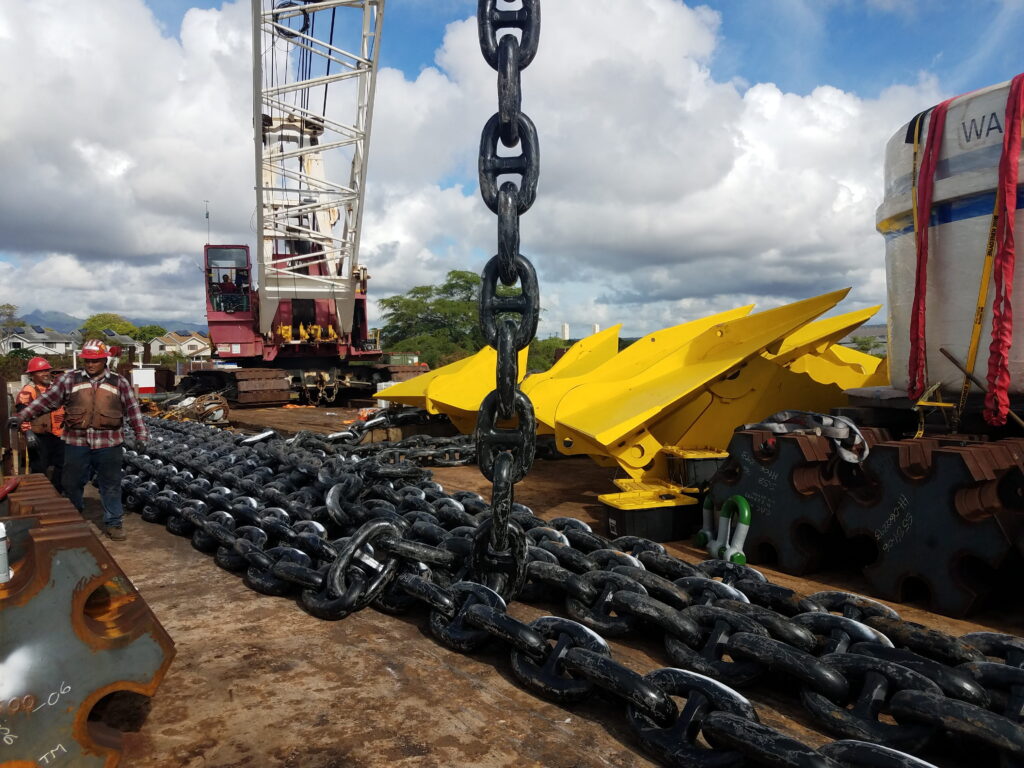
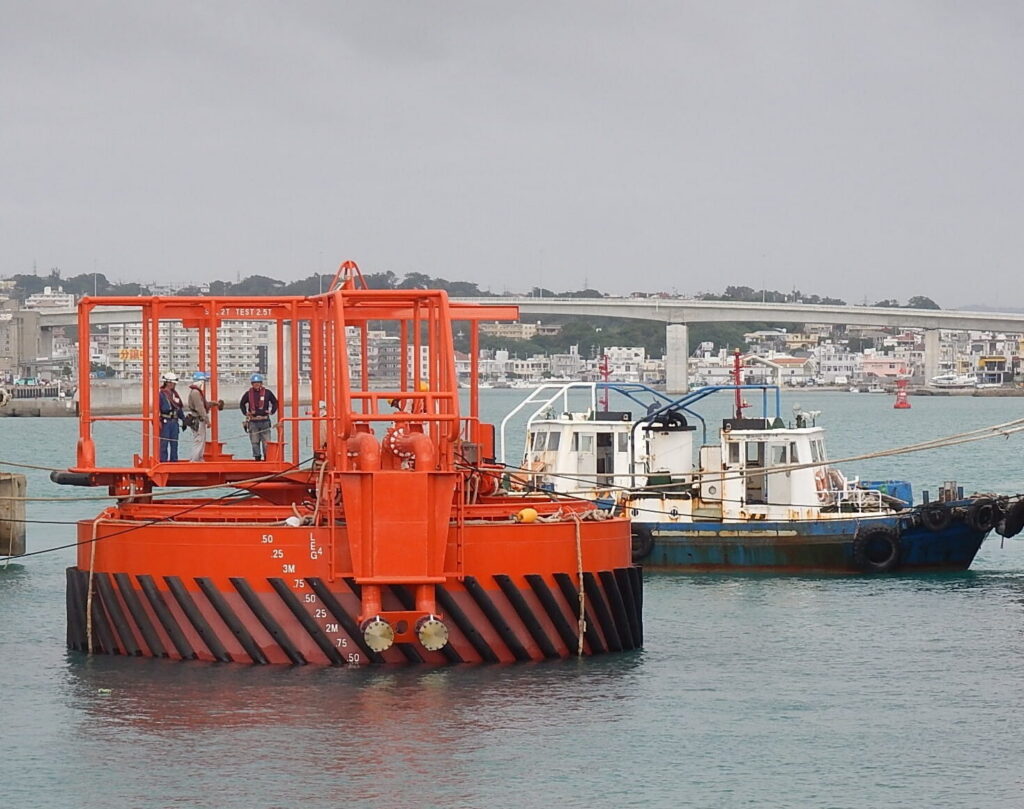
The resulting 328-by-100-foot, Discovery Pier was inspired by the 1892 Norwegian exploration vessel Fram. Unlike standard barges with vertical sidewalls, Discovery Pier features sloped walls designed to deflect ice pressure by allowing the hull to rise when beset in 10-foot-thick winter ice. Our preliminary design also included specialized mooring and anchoring systems to secure the platform to the fast ice, ensuring it can withstand extreme polar storms and annual ice floes.
PCCI focused on the early-stage design and mooring engineering, collaborating with Alaska-based R&M Consultants for upland engineering and geotechnical support. Following our initial study, the National Science Foundation engaged the U.S. Army Corps of Engineers for the detail design and build phase. As of February 2026, Discovery Pier is under tow to McMurdo Station to be permanently moored, securing the future of Antarctic research logistics.